HR Top Voices: Paulina Camacho, from recruiting to sitting at the decision table
Interview with Paulina Camacho, People Business Partner at Nexu, about strategic HR and how to earn a seat at the table without losing focus on people.
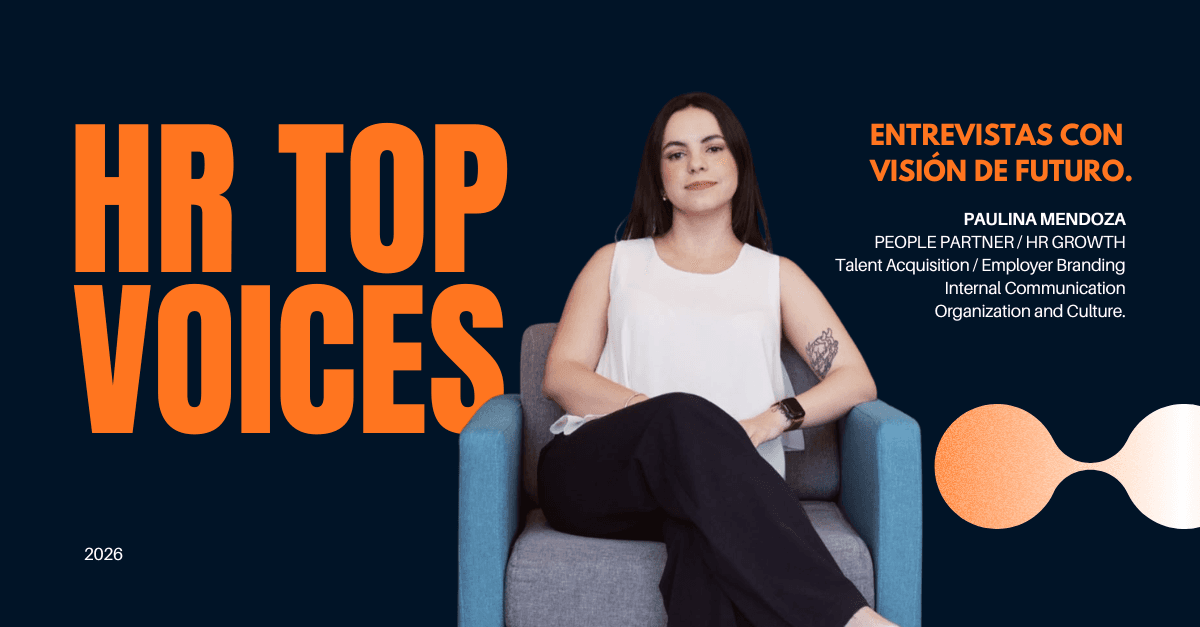
Paulina Camacho: From Recruiting to Sitting at the Decision-Making Table
There's a moment in any Talent Acquisition professional's career when they stop hunting CVs and start reading the business like an operations director would. For Paulina Camacho, that moment didn't arrive all at once. It arrived vacancy by vacancy, until leaders stopped seeing her as "the HR person who hires" and started seating her in meetings where money is discussed.
Camacho is a psychologist with nearly nine years of experience in Talent Acquisition and People, spread across retail, technology, and fintech. She worked at Central Outlet, Clikalia, and Pluxee before making the leap to HRBP at AORA, where she simultaneously led teams in Mexico and Ecuador, and today she is a People Business Partner at Nexu, where she supports the Technology, Data, and Product areas. She also holds a postgraduate degree in Human Resources from UNAM.
This article is part of HR Top Voices, Desky's series where HR professionals from across Latin America share, without filters, how they built their place within the organizations where they work.
From Recruiter to Internal Consultant
Paulina pinpoints the turning point during her time at Pluxee, where her role was 100% recruitment. There she understood that even an operational function like filling vacancies had a strategic layer that no one had taught her to articulate.
"Sometimes, leaders go completely toward the technical side when they want to hire someone, but that's where my role as a recruitment expert came in," she says. "Many times we set aside soft skills or potential by focusing too much on technical aspects, but my experience showed me that, from our position as experts, we can be consultants for these leaders."
That shift in perspective also meant unlearning habits. We came from operational recruitment—"fill 50 sales positions in a month," as she describes it—with the same profile and the same checklist for everyone. Moving to managing the complete talent lifecycle required the opposite: listening more, automating less.
Leading Teams That Aren't in the Same City (or the Same Country)
At AORA, Paulina managed teams in Mexico and Ecuador simultaneously, each with its own culture, regulations, and way of operating. Today Nexu operates only in Mexico, but the logic she learned there remains the same: to connect with a team, you first have to understand where and how it moves.
"It's my first time working completely with technology teams and I had to immerse myself in learning their language and environment: technical terminology, how these niche communities function, where these candidates move, what collaborators need beyond salary," she explains.
That same idea—that each distributed team has its own environment and its own needs—is what today complicates life for many People areas managing benefits for teams that don't share an office. A benefit like workspace, for example, stops being a simple line in the budget once the team spreads across several cities: each with its own coworking space, its own contract, its own invoice.
It's the same problem that Milagros Diez, Senior HR at Candor Investment Group, faced with a 100% remote team spread across several countries: negotiating coworkings city by city doesn't scale. She solved it by centralizing everything with a single provider, with a dashboard where she can see who uses which space, when, and how much the team spends. See how Desky works for companies
Fintech Speed, Solid HR Processes
Nexu is fintech, an industry where moving fast isn't optional. But Paulina is clear that "fast" and "solid" aren't opposites if HR understands the business.
"The main key that has worked for me, working in startups and now in fintech, is knowing the business, understanding customer needs, and immersing myself in what goes beyond People," she says. "You can build and manage things the right way when you know how the environment works: how we get investment rounds, what kind of company we are, what culture we want to have."
That clarity, she argues, is what allows her team to move fast with certainty rather than moving fast blindly.
Psychology as a Competitive Advantage
Before HR, Camacho studied Psychology. And according to her, it's what most differentiates her from a "by-the-book" HR profile.
"Psychology, in practice, gives you this sensitivity to know the other person. Whether we're in the clinical or organizational side, you learn to develop this 'clinical eye' that works really well," she explains. That sensitivity, grounded in stakeholders and business leaders, translates into a very concrete skill: knowing how to actively listen and detect needs that the other person hasn't yet been able to put into words.
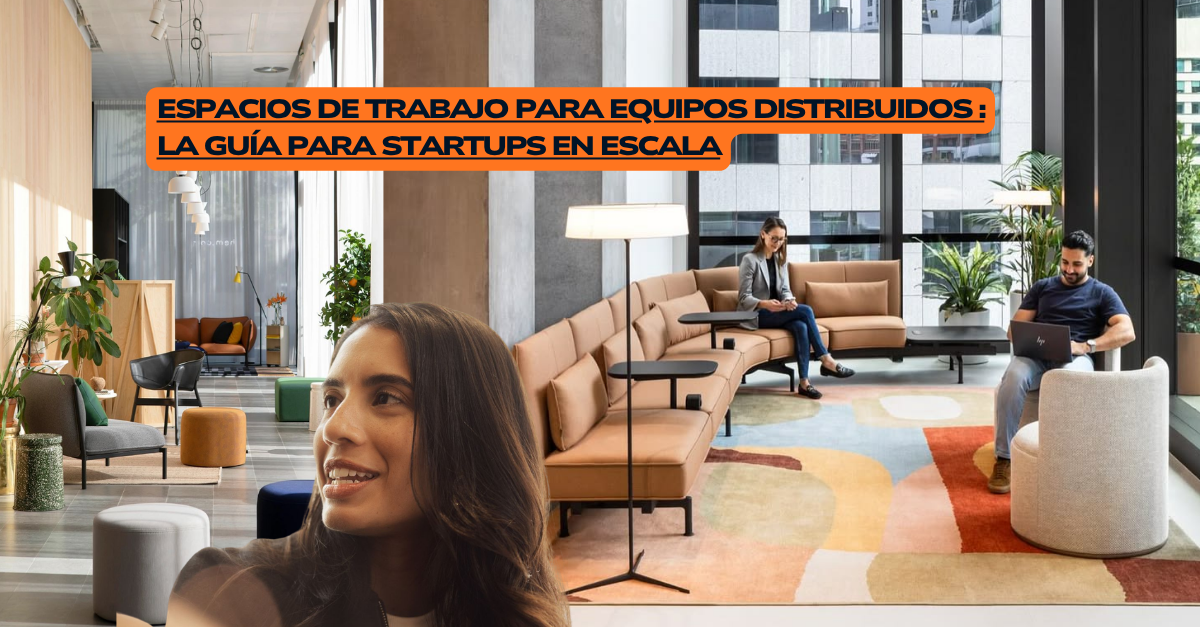 When your startup passes 100 people distributed across several cities, managing offices manually stops scaling. How to centralize budget, control, and space selection without losing sight of either spending or your team's experience.
Workspaces for distributed teams: the guide for scaling startups
The Advice of Nine Years from the Other Side of the Table
She recruited for banking, technology, and executive positions. With all that accumulated data, her advice for someone looking for work today isn't about the perfect resume:
"Don't take your finger off the trigger. And the second piece of advice would be: help luck along." She explains that much of the process depends on a recruiter seeing the right resume at the right moment among thousands of applications, so multiplying channels (LinkedIn, Careers, direct contact with the position leader) isn't excessive insistence—it's increasing your odds.
How to Really Win a Seat at the Table
Paulina Camacho didn't reach the decision-making table through seniority. She got there by speaking the language spoken at that table: numbers.
"I was able to show them that People plays an important role because we started talking about money: the cost of bad hires, the cost of turnover," she recalls about her transition to more technical positions within technology and cybersecurity. "That's when a bigger space opened up for me and I was able to have a seat at the table where strategy was being planned."
If she had to sum up that lesson for the Paulina starting out at Central Outlet, it would be in a single sentence: "Know everything you can about the business. This knowledge will give you a seat at the decision-making table, not just 'on the surface,' and it will also let you be the main voice for your collaborators' needs."
The KPI That Doesn't Tell the Whole Truth
Turnover, absenteeism, engagement: Camacho built entire dashboards of People KPIs. But the problem, she says, is almost never that the number lies. It's that the People team stays looking at it from way too high up.
"With turnover we say: 'Well, it's something normal in all organizations: people leave and we hire more,' but we don't grasp how large the cost of early turnover really is," she warns. "When we see it raw, we can understand that turnover isn't simply something that happens in all sectors and that's it: it has a cost, and a big one."
Her other warning is about paralysis from over-diagnosis: a huge dashboard of KPIs is useless if it doesn't translate into small, concrete actions. "Sometimes we think we have to raise salaries or add fifty superior benefits, and no. Sometimes a small movement creates a big change."
Why Career Development Plans Stay on Paper
At Nexu, Paulina helped build career and development programs. And she's identified the most common mistake when designing them: promising without mapping what the organization can actually sustain.
"I've seen many career and development programs that look great on paper and promise too much, but in practice are impossible," she says. "Nobody gives feedback, there are no follow-up plans or training. If the People team and direct leaders don't commit to working with collaborators to make this possible, everything stays on paper and in a promise for a veeeeery long time."
The Table Is Won with Business, Not Just HR
What runs through every one of Camacho's answers is the same idea repeated from different angles: the strategic place in HR isn't asked for, it's built by understanding the business with the same depth as a Product or Finance leader. That applies as much to justifying the cost of turnover as to designing a benefit that the team will actually use.
And there's a direct parallel with something many People areas experience every month: offering benefits that sound good in the recruitment pitch, but that in daily operations become a burden of contracts, invoices, and country-by-country approvals. The same criterion that Camacho applies to a career plan—mapping carefully before promising—applies to managing workspaces for distributed teams.
Camacho doesn't say it with workspaces in mind, but the pattern is the same: the average company manages between 4 and 7 different providers just for coworking—one contract per city, one invoice per space, one approval process per reservation. Desky sums it up in a single contract with access to thousands of spaces in Latin America and Europe, one monthly invoice, and zero fixed cost: you only pay for what your team uses.
Frequently Asked Questions About HR Business Partners and Distributed Teams
What differentiates a People Business Partner from a traditional recruiter?
The PBP doesn't just fill vacancies: they participate in business decisions, translate strategy into talent needs, and sustain the complete lifecycle of the collaborator, from recruitment to career development.
How do you manage benefits for teams distributed across several cities or countries?
The most efficient way is to centralize management with a single provider rather than negotiating city by city. This applies to benefits like gym memberships or wellness as much as to workspaces, and allows you to maintain total visibility of spending without multiplying contracts.
What HR KPIs are worth reviewing more closely in a fintech or startup?
Early turnover and absenteeism tend to be underestimated because they're treated as "normal for the sector." Measuring their real cost, not just their percentage, is what allows you to prioritize concrete actions instead of diagnoses that don't translate into changes.
 Best coworkings 2026: pricing and locations guide in Mexico City
View guide and spaces
Best coworkings 2026: pricing and locations guide in Mexico City
View guide and spaces
About HR Top Voices: this interview was conducted by Desky's editorial team, a flexible workspace platform for remote and hybrid teams in Latin America and Europe, as part of its series of conversations with HR leaders from the region.
Last updated: August 2026