Transform Conversations, Not Processes: María Paz Blanc on Leadership
María Paz Blanc transitioned from Law to lead agile transformation in biotech and is now Chief of Staff at a climate-tech company operating in over 20 countries. The costliest mistake she made while scaling, why she would eliminate status meetings, and what psychological safety really is.
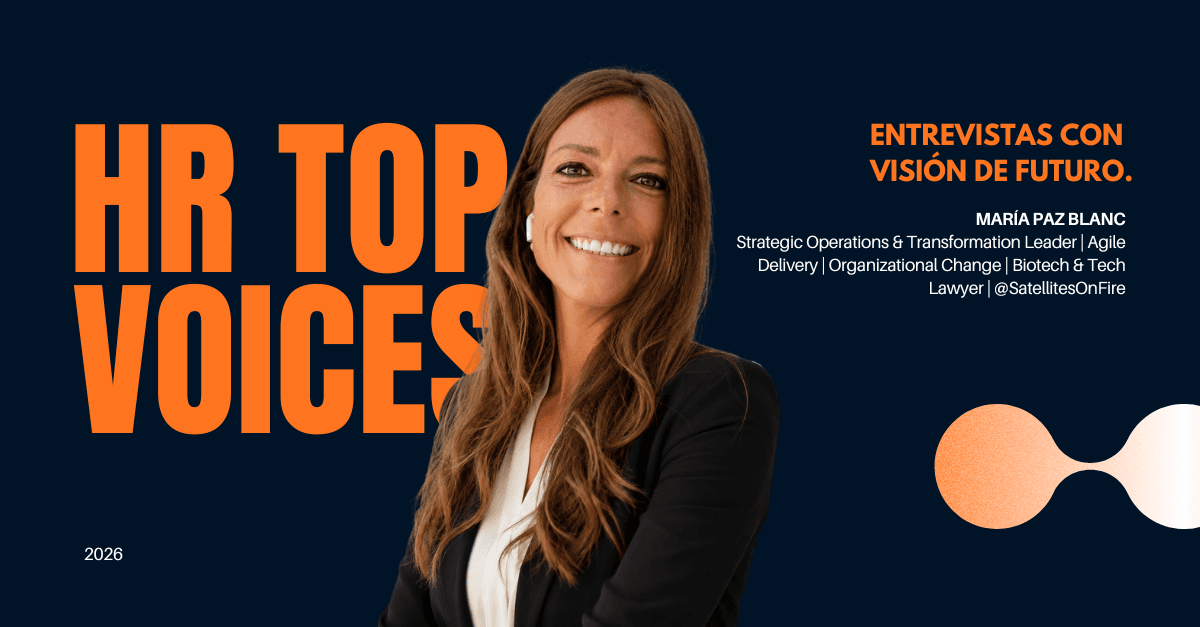
Start by transforming conversations, not processes: María Paz Blanc on leading real change
Nineteen products. Divisions with completely different needs. An entire team convinced they were all rowing in the same direction.
That was the scenario where María Paz Blanc learned, in the most uncomfortable way possible, that aligning a vision and aligning an organization are two very different things. It happened at Stämm, a biotech company, and she still uses it as a cautionary tale today.
"Thinking that once everyone understood the strategy, they'd automatically prioritize the same way" — that's how she sums up the mistake. "We invested heavily in vision alignment, but we didn't put the same effort into building a clear prioritization system. The result was that each team made good decisions... but optimizing for their own reality."
From that mistake came a rule she now applies to every new project: "Alignment doesn't happen because everyone shares an objective. It happens when there's a clear mechanism for deciding what to do when priority conflicts arise. Since then, I spend much more time designing how decisions get made than explaining strategy."
A lawyer by training, María Paz has led transformation, agility, and continuous improvement initiatives at companies in sectors as varied as biotech, and today she's Chief of Staff at a climate-tech startup operating in over 20 countries. We talked about what she learned the hard way, what still challenges her, and why her advice for any leader has nothing to do with methodologies.
From lawyer to strategy translator
The leap from Law to organizational transformation, as she tells it, isn't really a leap at all.
"I never really felt like I was changing worlds. What changed was how I helped people build something together. Law taught me to listen before I speak, to understand that behind every conflict there are different interests, needs, and perspectives. Organizational transformation showed me exactly the same thing, just inside companies."
What she did have to unlearn was an assumption almost nobody questions in a leadership role: that you always need to have the right answer.
"In a startup, especially one growing fast, perfect information almost never exists. I learned that often the best decision is to make a good-enough one, measure the impact, and correct quickly. Today I believe our real job is to ask better questions, listen with curiosity, and create the context for answers to emerge that are often better than our own. Because when someone feels their voice matters, they stop just executing. They start creating."
"Being more agile" doesn't mean what most people think
It's one of the most repeated phrases in any office today — and one of the least acted upon. María Paz has a theory about why.
"Organizations don't change when they implement new methodologies. They change when people discover that their individual talent can serve a shared purpose. Agility doesn't start with a framework, it's not a methodology. It's a change in behavior."
The pattern she describes is familiar to anyone who's been through an agile transformation: "Many organizations implement Scrum, Kanban, or OKRs expecting different results, but keep exactly the same incentives, the same approval processes, and the same control culture. The consequence is they end up doing agile ceremonies on top of completely traditional structures."
Her underlying question isn't about tools: "The real question is never 'what framework do we use?'. It's: what decisions are we willing to stop centralizing?"
And behind it all, she says, there's one single condition that no methodology can replace.
"It's very hard to ask for innovation in a place where people are afraid of making mistakes. It's impossible to talk about continuous improvement when people feel every error will be used to assign blame. Organizations usually invest a lot of time changing processes and very little time asking how the people carrying out those changes actually feel."
That's where she names the contradiction she sees repeat itself over and over: "We expect creativity from people working under constant pressure. We expect collaboration from teams competing with each other. We expect autonomy while controlling every decision. For me, being an agile organization means building spaces where people can think, question, learn, and feel safe trying new things. Innovation doesn't come from a methodology. It comes from psychological safety."
The first thing I'd strike from the calendar
We asked what ritual she'd eliminate if she had the power to make it vanish at once. She was direct: status update meetings.
"Not because reporting on progress isn't important, but because most of those meetings exist to make up for poor visibility of work. If a team needs an hour every week for everyone to know what everyone else is doing, the problem probably isn't the meeting — it's the work system."
Her alternative isn't eliminating conversation — it's changing what it's about. "I prefer conversations focused on decisions, blockers, or learning. Updates should be available before you even walk into the meeting."
And that connects to something she repeats in different ways throughout our conversation: "I've always believed that an organization's most valuable asset isn't its strategy. It's people's ability to build something that individually they could never accomplish alone."
The first sign of a crisis doesn't show up on any dashboard
When we asked what signals to her that a team is about to hit a wall, she didn't talk about metrics. She talked about silence.
"When genuine conversations stop happening. I'm not talking about the number of meetings. I'm talking about those spaces where someone can say 'I disagree', 'I don't understand', 'I think we're making a mistake' without worrying it will cost them something."
"When people start staying silent, the problem has already begun."
She describes it almost like a clinical sequence: first curiosity disappears, then questions, then challenging ideas. "Before the metrics drop, curiosity usually vanishes. People stop asking questions. No one challenges ideas. Everyone tries to look good. And a team that stops talking stops learning."
That's why, she says, real listening — even when it's uncomfortable — is one of the most underestimated leadership tools that exists. "It usually prevents problems much better than any dashboard."
The most common misconception about the Chief of Staff role
It's still a tough role to explain at a casual gathering, and María Paz knows it.
"It's not an administrative role. It's not the CEO's right hand in an operational sense. For me it's a translation role. Translating strategy into execution, decisions into processes, and priorities into focus so the whole organization moves in the same direction. Many people think the job is about coordinating projects. I think it's about connecting people."
The distinction isn't just semantic. "Strategies don't get executed because they're well-written. They get executed when people understand why they're doing what they do, how their work impacts others, and feel they're part of a shared purpose. A big part of the role is building those bridges. Between departments. Between priorities. Between cultures. And often between people who speak completely different organizational languages. When that connection appears, coordination stops feeling like constant effort and becomes genuine collaboration."
Twenty countries, one same problem
With operations in over 20 countries, we asked what makes things harder: distance or scale. Neither one, according to her — the problem is something else.
"Complexity doesn't come from distance. It comes from context. Each market has different speeds, different regulations, and particular business needs. The challenge is finding the balance between giving local autonomy and maintaining global coherence. If you standardize too much, you lose speed. If you let every country do things differently, you lose scale."
There's no one-size-fits-all formula to solve it, and she says so without pretending to have one: "Finding that middle ground is probably one of the most interesting challenges any international company faces."
What really holds a remote team together
No virtual happy hours or mandatory trivia games. When we asked what built belonging in her remote teams, the answer was almost anticlimactic.
"What built belonging was never mandatory social activities. It was feeling that each person's work really mattered. The practices that worked best were one-on-one conversations, frequent feedback, and transparent important decisions."
Everything else, for her, is window dressing. "Many culture initiatives end up being performative when they try to replace with activities what should actually be built with trust."
What she still hasn't solved
With all this track record behind her, we asked what still drains the most energy from her day-to-day work. She didn't hesitate, though she didn't present it as solved either.
"Priority management. In organizations growing fast, opportunities constantly appear and they all seem urgent. The real challenge usually isn't deciding what to do. It's deciding what not to do. I still think it's a permanent tension and probably never goes away completely."
The advice that has nothing to do with methodologies
We closed by asking what she'd tell someone about to start a transformation process. She didn't mention any framework.
"Don't start trying to transform processes. Start by transforming conversations. Methodologies can be learned. Tools change. Technology evolves. But organizations are still made of people. And people need to feel heard, valued, and safe to bring their best selves."
Her closing sums up, in a single sentence, the fifteen or twenty years of career we've just covered:
"I've never seen a sustainable transformation built on processes alone. But I've seen many that started the day a leader decided to listen more than they talked."
HR Top Voices is Desky's series where we hand the microphone to those who lead people at Latin America's fastest-growing companies. María Paz is someone who learned to lead by translating, not imposing — and this conversation proves it better than any summary we could give.
About María Paz Blanc: specialist in organizational transformation, strategy, and execution. Lawyer by training, she built her career leading transformation, agility, and continuous improvement initiatives at companies across sectors, from biotech to climate-tech. She has coordinated multidisciplinary teams, guided organizational change processes, and worked on alignment between strategy, operations, and people. Today she drives cross-functional execution projects at an international startup, focused on building more agile, collaborative organizations ready to scale.
Managing a distributed team and still dealing with multiple workspace providers? There's an easier way. 👉 Learn how Desky works for companies
Published by the Desky team — July 2026